How to reverse park into a bay (90° parking)
Updated October 2026
Bay parking, the 90° park, is the one you do at the supermarket, the car park and the test centre. Reversing in is safer than driving in: the car is already facing out, so leaving later is easy. The whole thing depends on one decision: where your car is when you start to turn.
These steps assume right-hand traffic, with the kerb on your right. If you drive on the left, swap every left and right.
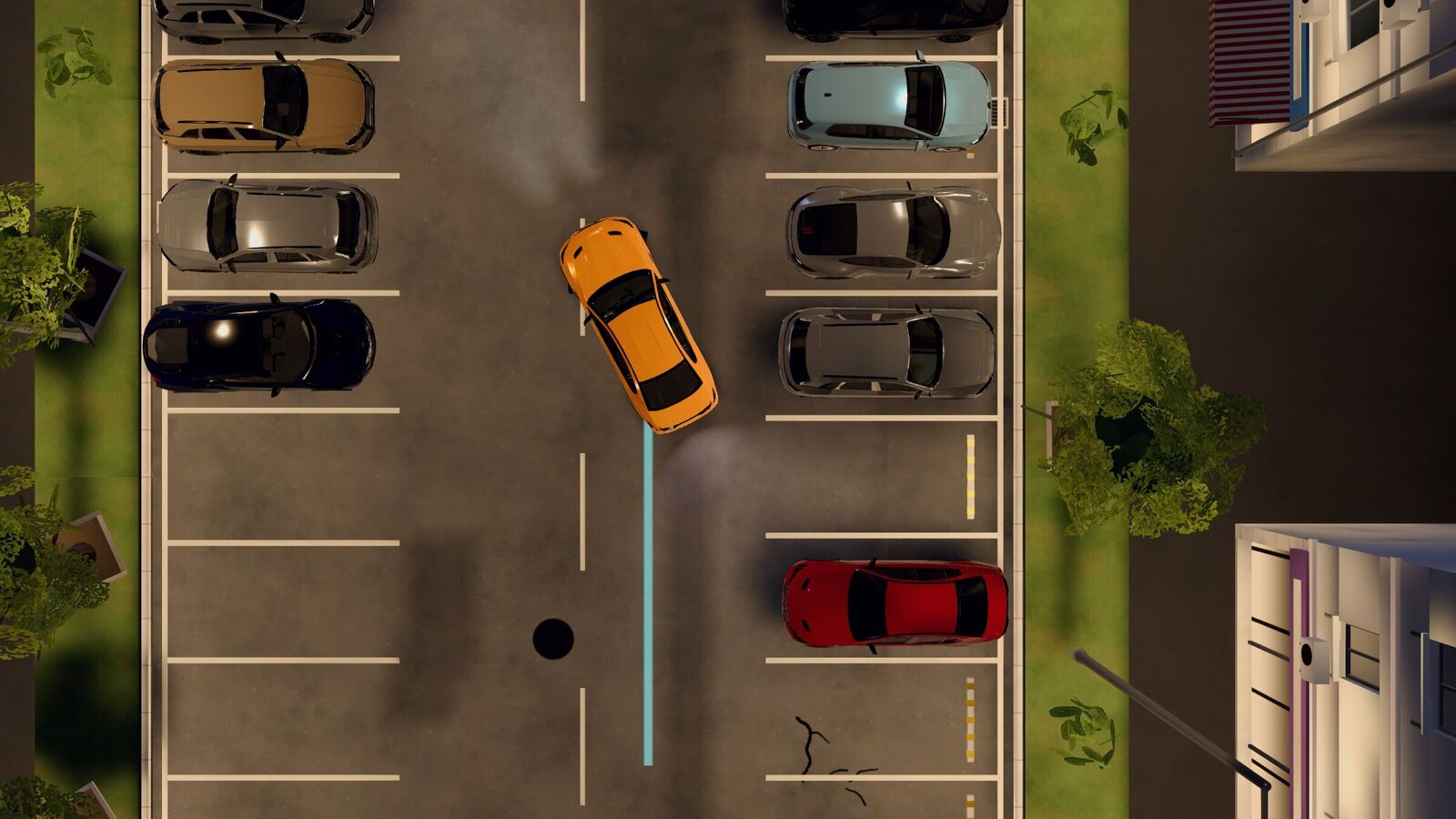
Step by step
Pass the bay and stop
Signal, then drive slowly along the row with the empty bay on your right, about a metre and a half (5 ft) away from the parked cars. Stop when the rear of your car is level with the first line of the bay you want. The exact mark varies with the car and the width of the bay, so find yours in practice.
Look, then steer in
Check the mirrors and look over your shoulder. Release the brake and turn the wheel fully towards the bay while the car begins to creep backwards.
Watch the lines in the mirrors
Your rear swings into the bay. Use both side mirrors to see the lines of the bay on each side. When the car is square to the bay, straighten the wheel.
Straighten and reverse in
With the wheel straight, reverse slowly until you are about a hand-span from the kerb, the wall or the back line, or until the sensors say stop. Check the gap on each side; adjust with a short pull forward if you are off-centre.
Park, and plan the exit
Apply the parking brake and select P or first gear. Leaving is easy because you pull straight out, but look both ways first: before you turn, your rear wheels must be past the corners of the cars beside you.
Common mistakes
- Starting the turn too early. If you turn before the rear of your car is level with the bay’s first line, the back of the car cuts the corner of the neighbouring bay.
- Stopping too close to the parked cars. A narrow first pass leaves you no room to swing. Keep about a metre and a half of aisle between you and the row.
- Straightening too late. You arrive at an angle and finish touching a line. Straighten as soon as both mirrors show the lines parallel to your car.
- Fast reverse. A slow, steady creep gives you time to see and to correct. Rushing turns every small error into a bump.
Tips that make it easier
- Tip both mirrors down a little so the bay lines stay in view.
- Choose a bay with room on both sides, and if you can, one with no car on the side you steer towards.
- Use the front reference: the line that disappears under the bonnet tells you where the car really is.
In the driving test
In many tests the bay park is one of the set manoeuvres. Examiners expect good observation, a controlled speed and a car that finishes inside the lines, not touching them. If you are off-centre, a short, calm correction is usually fine.
Quick answers
Is it better to reverse into a bay or drive in forwards?
Reversing in is usually safer, because you see the empty bay and later pull out facing the aisle. Check your local rules: some car parks require front-in parking.
What if the bay is narrow?
Start further from the row so the car arrives more squarely, go slower and use a short forward adjustment to centre.
Which way should I look?
Over the shoulder on the side you are steering to, then both mirrors as you straighten.
Practise it in ParkingAim
Reverse into a bay, drive in forwards, and weave between the pillars of an underground car park.
- Back-In Perpendicular ParkingThe safest way to park in a parking lotFull Version
- Forward Perpendicular ParkingApproach wide, watch the inner rear wheelFull Version
- Underground Garage with PillarsBetween pillars, narrow aisleFull Version
Park it for real, without the risk
ParkingAim is a parking trainer for iPhone, iPad and Mac. A calm instructor’s voice talks you through each move in a 3D city, sized to your car. Three lessons are free.

More parking guides
Angle parking
How to approach, when to turn and how to straighten in a diagonal space.
Reversing in a straight line
Where to look, how little to steer and how to keep the car on line.
Parking on a hill
Which way the wheels turn, with and without a kerb, and the order that keeps the car where you left it.