How to parallel park, step by step
Updated October 2026
Parallel parking looks like a trick, but it is one fixed sequence: stop in the right place, reverse at full lock to about 45°, straighten, then swing the nose in. Most failures come from the first stop being in the wrong spot, not from the steering. The method below works in any car; only the exact distances change with the car’s length.
These steps assume right-hand traffic, with the kerb on your right. If you drive on the left, swap every left and right.
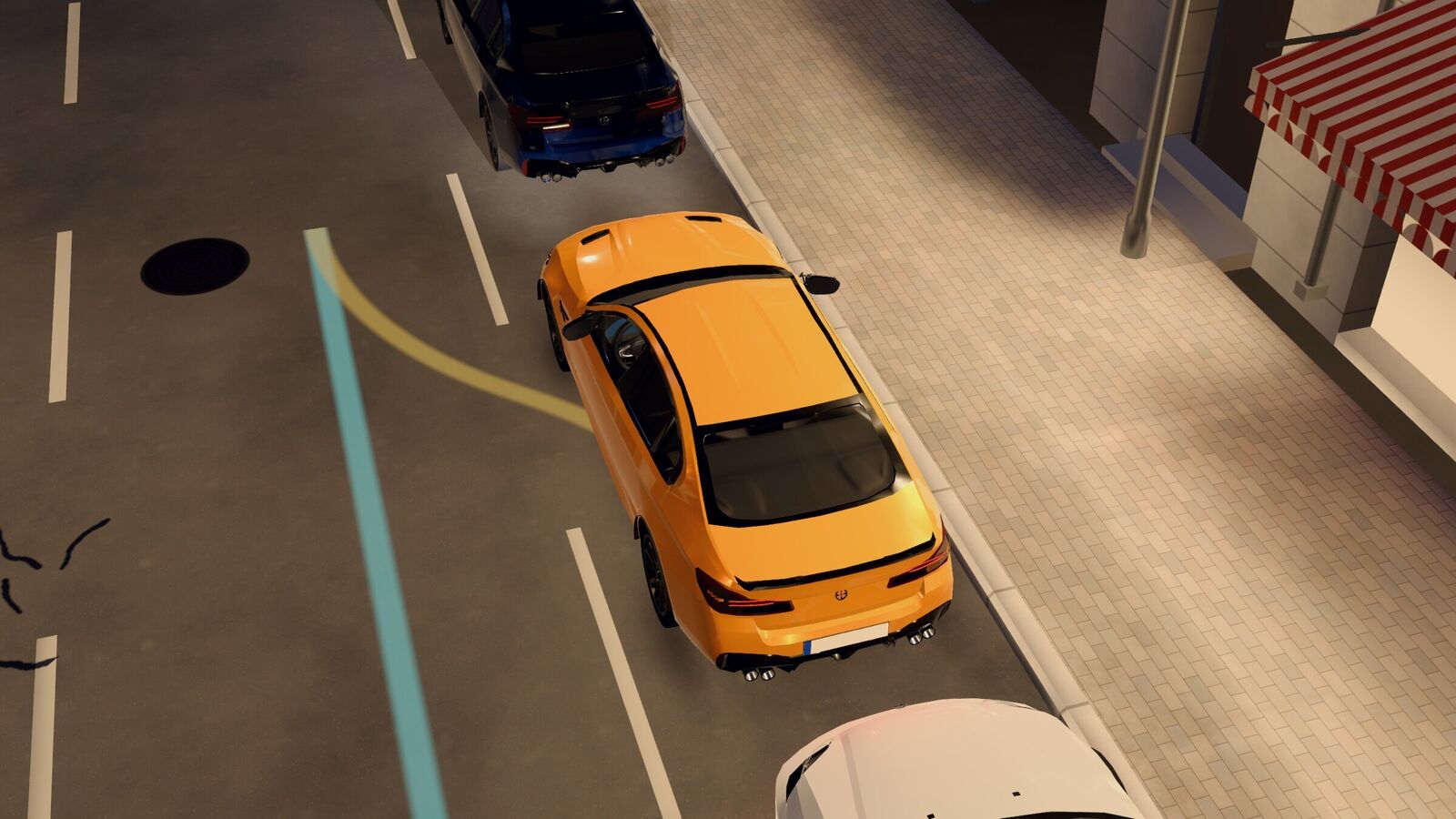
Step by step
Choose a space you can fit
Look for a gap about one and a half car lengths long. Check there is no hydrant, driveway, crossing or sign that forbids parking, then signal towards the kerb so the traffic behind knows what you are doing.
Stop beside the car in front
Pull up parallel to the car ahead of the gap, about 50–75 cm (2 ft) away from it, with your rear bumper level with its rear bumper. This stop sets up everything that follows, so take your time and stop completely.
Reverse at full lock towards the kerb
Check the mirrors and over your shoulder, then turn the wheel fully towards the kerb (about one and a half turns) and reverse slowly. Stop when the car is at about 45° to the kerb.
Straighten and reverse straight back
Bring the wheel back to the middle while the car creeps, then reverse straight until your front corner has cleared the rear of the car in front. Look over your outside shoulder to be sure the road is clear.
Full lock away from the kerb
Turn the wheel fully the other way and keep reversing slowly. The nose swings in behind the front car and the car comes parallel to the kerb. Stop before your bumper touches the car behind.
Centre the car
Straighten the wheel, then move forward or back a little so you sit evenly between the two cars, 10–30 cm from the kerb. Apply the parking brake, select P or neutral and switch the signal off.
Common mistakes
- Stopping too close or too far from the front car. Closer than about half a metre and the nose clips the car in front; much wider and you finish far from the kerb. Use the same gap every time.
- Turning the wheel while the car is stopped. It scrubs the tyres and strains the steering. Let the car creep, then steer.
- Reversing too fast. Parallel parking is done at walking pace or slower. Use the brake pedal to hold the speed down; the idle speed of the engine is usually enough.
- Watching only the mirrors. As you swing in, the front of your car sweeps into the road. A quick look over your shoulder shows traffic the mirrors do not.
- Straightening too early. If the car is not at about 45° when you straighten, you will finish at an angle and have to start again.
Tips that make it easier
- Tip the kerb-side mirror down before you start so you can see the kerb and the rear wheel together.
- A longer car needs a longer gap and a wider first stop. Check your own car’s length rather than trusting a rule of thumb.
- If you end up crooked, drive out and start again: one clean second attempt beats five small corrections.
In the driving test
Parallel parking is one of the most common manoeuvres in driving tests. Examiners usually look for observation, control and accuracy: checks before and during the move, smooth speed, and finishing parallel close to the kerb without touching it. Rules differ by country and test centre, so check what yours expects.
Quick answers
How big a space do I need to parallel park?
Aim for about one and a half times your car’s length. Beginners often need more; with practice you can use gaps barely longer than the car.
How far from the kerb should I finish?
A good target is 10–30 cm (4–12 in) and parallel. Local rules and signs always come first.
Why does the car end up at an angle?
Almost always because the wheel was straightened too early or too late. Stop at 45°, straighten, reverse, then turn the other way.
Practise it in ParkingAim
In ParkingAim the parallel park is a whole chapter: park on the right, on the left, in a tight space and drive out again. The first one is free.
- Parallel ParkingThe classic 45° method, between two carsFree
- Parallel Parking — Other SideTo the left curb of a one-way streetFull Version
- Parallel Parking — Tight SpaceCar length + 1.25 m, several movesFull Version
- Leaving a Parallel SpaceGetting out of a tight spot safelyFull Version
Park it for real, without the risk
ParkingAim is a parking trainer for iPhone, iPad and Mac. A calm instructor’s voice talks you through each move in a 3D city, sized to your car. Three lessons are free.