How to park in snow and ice
Updated October 2026
Snow and ice change every part of parking: the car takes longer to stop, tyres slip when they turn at full lock and the kerb is hidden. The skills are the same, but everything is slower, gentler and starts earlier.
These steps assume right-hand traffic, with the kerb on your right. If you drive on the left, swap every left and right.
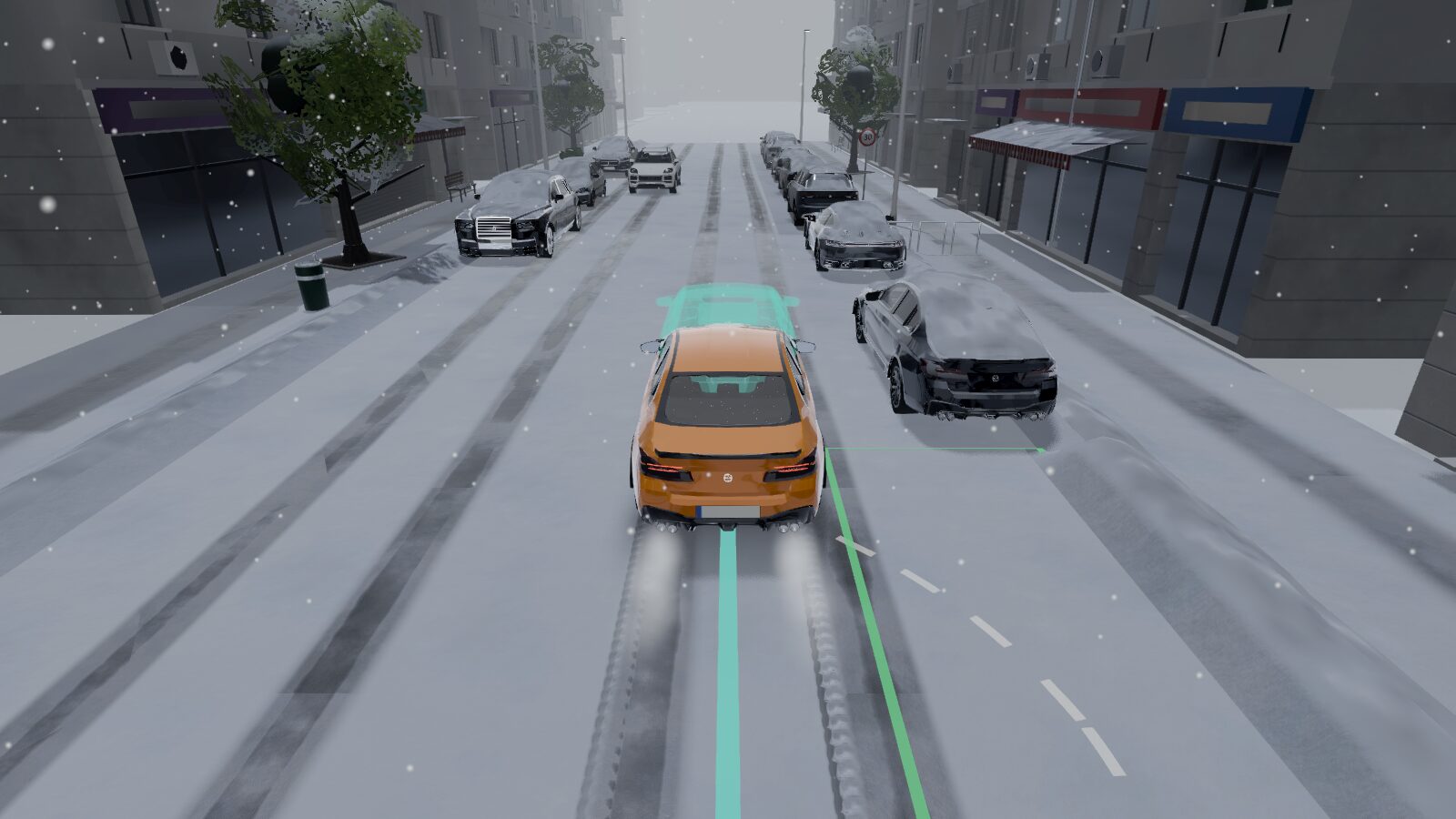
Step by step
Slow down early
On ice, a car can need several times its normal braking distance. Start slowing well before the space and use the brake gently so the wheels do not lock.
Clear the car first
Clear all windows, mirrors, sensors and the camera lens. A fogged or snow-covered sensor can stay silent.
Steer gently and keep rolling
At full lock on ice, the tyres can skid straight on. Turn the wheel smoothly while the car creeps, and straighten if it slides.
Park clear of the snow banks
Look for the kerb under the snow. Leave room for the plough, and for your door.
Set off gently
Straighten the wheels, use light throttle and in a manual use second gear. If the wheels spin, ease off, then try again gently.
If you are stuck, rock it out
Straight wheels, then move gently between forward and reverse to build a small rhythm. Stop if the wheels dig in.
Common mistakes
- Braking late and hard. On ice, this locks the wheels or triggers ABS and the car slides on. Brake early and smoothly.
- Spinning the wheels. Digging in makes it worse. Ease off and try again gently.
- Parking across the plough’s path. On snow routes, a badly parked car blocks the clearing. Check signs.
Tips that make it easier
- Keep a small shovel and a mat in the boot for tyre grip.
- If you brake and feel the pedal pulse, that is the ABS working; keep the pressure steady and steer.
- Park where you can set off downhill or on level ground the next morning.
In the driving test
Winter driving is not tested directly, but parking in winter conditions shows how much of your skill is smooth control.
Quick answers
Should I use the parking brake in freezing weather?
Follow your handbook. In very cold, wet weather a parking brake can freeze; in that case park in gear on a flat surface.
How much longer does a car take to stop on ice?
Many guides say up to ten times longer, so leave far more room than you think.
Can I practise snow parking safely?
Yes, in ParkingAim’s Full Version: snowy bays, an icy hill start, a snow bank and a stop line.
Practise it in ParkingAim
The Full Version has four snowy lessons: a snow bay, a hill start on ice, getting out of a snow bank and stopping at a line.
- Parking Without LinesA snowy car park, its lines buriedWinter
- Hill Start on Snow12% uphill, snow on the roadWinter
- Parallel by a SnowbankThe plough's bank hides the kerbWinter
- Stop on a Snowy Descent12% downhill, a crossing at the bottomWinter
Park it for real, without the risk
ParkingAim is a parking trainer for iPhone, iPad and Mac. A calm instructor’s voice talks you through each move in a 3D city, sized to your car. Three lessons are free.